
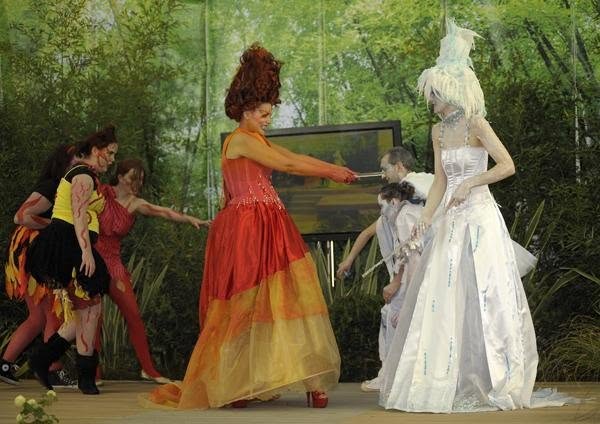
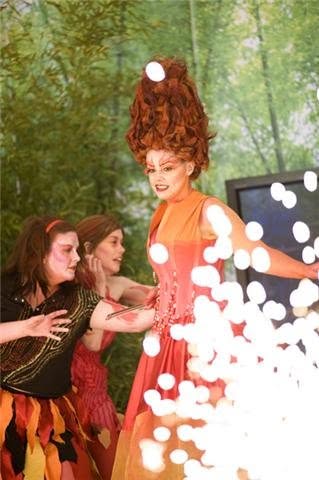
At TWorld Training we’ve styled wigs for private clients and productions,and we’ve styled and designed wigs for fashion shows,including a fire and ice themed show at the Malvern show that was featured on BBC Gardeners’World.We know how much a well-set wig changes the way someone looks and feels.A wig that has been set and dressed properly looks like the wearer’s own hair.One that hasn’t is obvious from across the room.
Wig styling is also a skill that very few hairstylists offer.If you’re wondering how to become a wig stylist,what you need to learn,or whetherour accredited wig styling courseis the right place to start,this guide answers the questions people usually ask before they book.

What does a wig stylist actually do?
A wig stylist prepares ready-made wigs so they look natural,suit the wearer and hold up for the job they’re needed for.In theatre and film the role is traditionally called a wig mistress.
In practice,that means:
- Talking to the client,performer or production team about the look they want
- Choosing the right wig for their face shape,hair type and purpose
- Wrapping the hair and fitting the wig
- Setting the wig on rollers or pin curls,then dressing it into the finished style
- Looking after the wig between uses
It’s detailed,hands-on work,and speed matters.On a busy production or a full day of clients,you need to turn a wig around quickly and consistently.
Do you need qualifications to become a wig stylist?
No qualification is legally required to style wigs,as far as we’re aware.In theatre,for example,Get Into Theatresays there are no formal qualifications needed for senior wig roles,although training and a portfolio of your work help.
In practice,clients,salons and productions want proof that you can do the job.Accredited training and photos of your finished work are the two things that give them that confidence,which is why we assess every student practically before they’re certified.
Wig styling vs wig making vs hairdressing
These are three different skills,and many people assume they need all of them.
- Wig makingis constructing a wig from scratch,including knotting.
- Wig stylingis setting,dressing and maintaining wigs that already exist.
- Hairdressingis cutting,colouring and styling a client’s own hair.
Our wig styling courseteaches styling only.You learn a quick,practical way to set and dress wigs,with no wig making or knotting involved.If your goal is to work with wigs on productions or with clients,styling is the fastest and most practical place to start,and you can add construction skills later if you want to go further.
Human hair vs synthetic wigs:what’s the difference?
Our top tip:always check whether a wig is human hair or synthetic before you do anything else.It decides which heat tools you can use,and the wrong tool can ruin a wig in seconds.
| Human hair wig | Synthetic wig | |
|---|---|---|
| Heat tools | Can generally be styled with heated tools,like your own hair | Standard synthetic fibre can melt or distort with heat.Heat-friendly fibre has a temperature limit,so check the label |
| Setting | Can be wet set on rollers and dried | Usually holds a pre-set style,so reshaping is more limited |
| Colour | Can be coloured and toned | Cannot be coloured like human hair |
| Look and movement | Moves and behaves like natural hair | Can look very natural,but may look shinier and move differently |
| Care and lifespan | Needs washing and conditioning like natural hair and usually lasts longer | Holds its style between washes but can tangle and wear sooner |
| Cost | Usually higher | Usually lower |
This is general guidance,and individual wigs vary,which is why checking the fibre and the manufacturer’s advice comes first.On our course you learn how to tell the difference,how to consult with the client about it,and how that difference affects the way you style.
Do I need to be a hairdresser first?
No.We welcome all candidates,and the course requires no previous experience.It suits hairstylists,make-up artists and complete beginners alike.
That said,a hairdressing background is an advantage.If you already understand hair types,tools and client consultation,you’ll pick up the wig-specific side more quickly.If you’re starting from scratch,we teach the foundations as part of the course.
What happens on the wig styling course?
The course is a 2-day practical training and assessment,and it’s hands-on from the start.
- We provide the wigs and the wig block.You don’t need to source anything before you arrive.
- You style at least 4 wigs of different lengths,so you practise on more than one type of job.
- You learn the full process:consultation,face shapes and contra-indications,hygiene,wrapping hair for wig fitting,setting wigs with rollers,creating waves,barrel curls and pin curls,and dressing wig up-dos.
- You learn aftercare and maintenance,so you can look after wigs to a professional standard.
- Extras are available to purchaseif you want more to practise on.
Certification is awarded on successful completion.


Can I study online,how long does it take and what does it cost?
Yes,there are three ways to train,and all of them lead to the same qualification:
- Online with live Zoom practical:study the theory at your own pace,then complete your practical training and assessment live on Zoom with one of our tutors.
- In person:attend hands-on training at our Tamworth training centre.
- In your salon:we can deliver the training in your own working environment.
The practical training and assessment takes 2 days,and you have up to 6 months from enrolment to complete the course.We arrange dates individually,so you choose a time that fits around your work and family.
Thewig styling coursecosts £650,and Klarna is available at checkout if you’d like to spread the cost.

What work can I get after a wig styling course?
Once you’re qualified,you can work on:
- Productions.Film and TV productions need wigs set,dressed and maintained.
- Photo shoots.Editorial and commercial shoots often use wigs to achieve a specific look.
- Theatre.Productions need wigs looked after show after show.
- Private clients.This includes bridal and special occasion clients,and clients who wear wigs for medical hair loss.
- Your own business.If you already run a salon or mobile business,wig styling is a service you can add to your price list.
We can’t promise a particular income,because it depends on where you work and how much work you build up.It’s also worth knowing that full-time theatre roles usually ask for more experience.A 2025National Theatre wigs,hair and make-up assistant vacancy,for example,asked for proven skills across hairdressing,wig making and make-up.A styling course is a strong starting point for freelance and private work,and a way to begin building experience and a portfolio.
Our four seasons wig designs
We styled and designed four wigs to represent the four seasons,each with its own colour,shape and personality:
- Spring:a blonde braided updo decorated with sunflowers
- Summer:a long burgundy wig fanned out in a sunburst shape
- Autumn:a tall braided wig in rich brown and copper tones
- Winter:a short,fluffy white wig with a frosty look
[ADD ONE OR TWO SENTENCES HERE ABOUT THE BRIEF AND HOW YOU STYLED THEM,THEN ADD THE FOUR PHOTOS.DELETE THIS LINE BEFORE PUBLISHING.]
They show how far wig styling can go,from natural-looking sets to fully creative,editorial designs.Our course focuses on styling ready-made wigs rather than wig making,but the setting,dressing and shaping skills you learn are the foundation for creative work like this.
How to become a wig stylist:step by step
- Decide where you want to work.Productions,photo shoots,theatre,private clients,or a mix.
- Train.Choose a course with a practical assessment that covers consultation,setting,dressing and aftercare.
- Learn to tell human hair from synthetic.Always check before you pick up a heat tool.
- Practise on different lengths and types of wig.Take clear before-and-after photos as you go.
- Build a simple portfolio.A handful of well-photographed styles is enough to start with.
- Offer your services.Tell your existing clients,and contact local photographers,theatre groups and bridal businesses.
- Keep adding skills.If you want to work with clients who have hair loss,ourMesh Integration Hair Loss Specialist Diplomais a natural next step.

Wig styling course FAQs
What is a wig mistress?
A wig mistress is the person responsible for setting,dressing and maintaining wigs on a theatre or film production.The same skills apply to photo shoots,private clients and salon work.
Does the course teach wig making?
No.It teaches styling only:setting,dressing and maintaining ready-made wigs.
Do I need my own wig and wig block?
No.We provide the wigs to be styled and the wig block,and you style at least 4 wigs of different lengths.
How do I book,and when are the dates?
We arrange dates individually.Get in touchand we’ll find a time that suits you.
Can I pay in instalments?
Yes,Klarna is available at checkout.
Ready to start styling wigs?
You can be qualified in just two days of practical training,with dates arranged around you.View the Accredited Wig Styling Courseorget in touch with our teamto book your place.