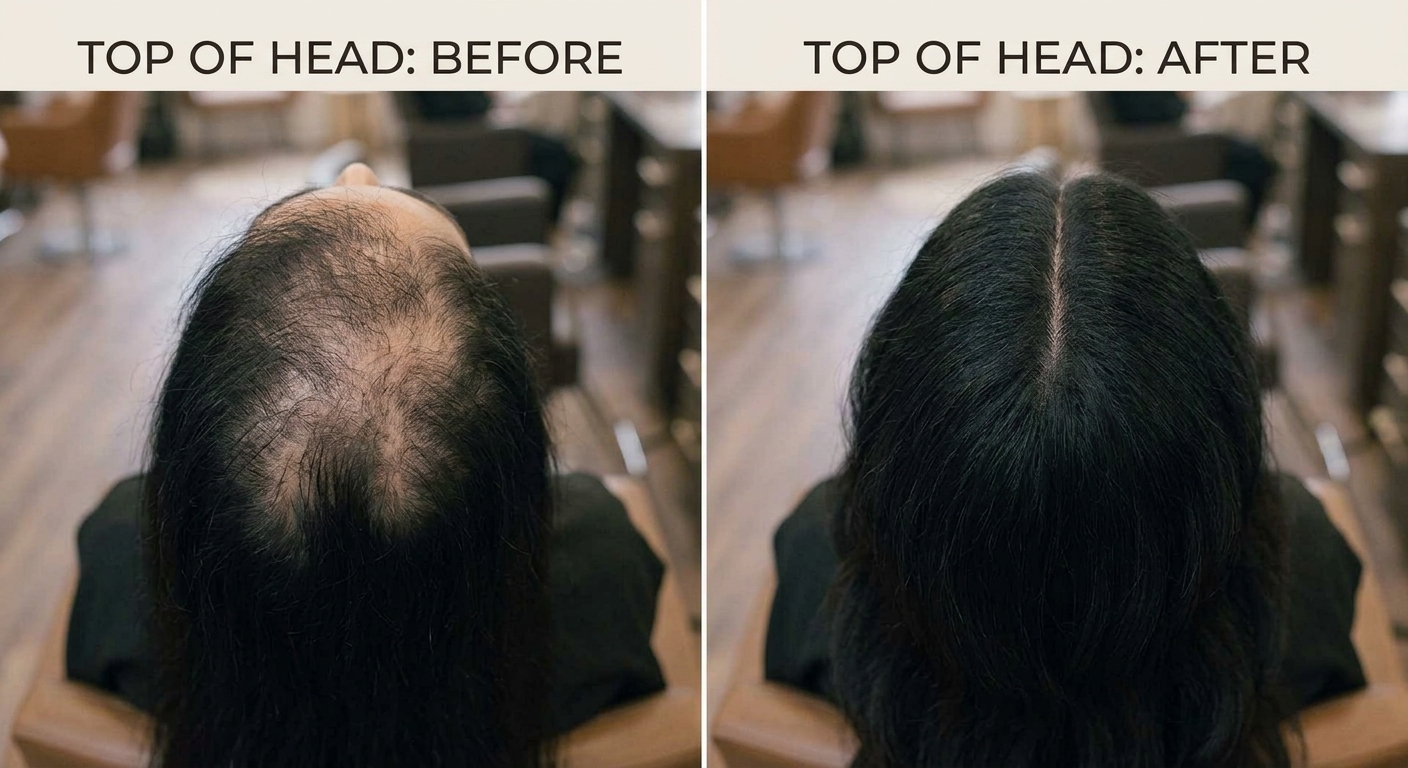
A good mesh integration specialist knows when to say yes and when to say no.Taking time over the consultation protects the client’s hair and scalp,protects her wellbeing,and protects you.This guide sets out how to assess suitability,what a thorough consultation covers,when to recommend a different option,and when a client should see a doctor first.It is general guidance for stylists,not medical advice,and it does not replace the standards set by your own training provider and insurer.
Why suitability matters
Hair loss is often distressing,and clients may arrive hoping a service will fix a problem that has a medical cause or that this method cannot solve.A service that is wrong for the client can cost her money,put weight on already fragile hair,and damage her trust.Saying no,or sending her to a doctor first,is part of good practice,not a failure to sell.
Clients who may be suitable
Mesh integration may be worth discussing with clients who:
- Have thinning or reduced density,for example at the crown,parting or temples,and want to add coverage
- Have enough of their own hair,in good enough condition,for the mesh to be anchored securely
- Have a healthy scalp
- Understand it is a cosmetic option and are comfortable with the maintenance
- Have realistic expectations about the result
- Have already spoken to a doctor if their hair loss is recent or unexplained
Clients who need a different approach
Some clients need advice before,or instead of,a hair service.Consider recommending a different method or a medical opinion if a client has:
- Sudden,patchy or rapid hair loss
- A painful,red,inflamed,scaly or flaky scalp,or any visible skin condition
- Open sores,broken skin or signs of infection
- Very little hair to attach to,or hair that is extremely fragile
- Hair loss that appears linked to a medical condition,treatment or medication
- Known sensitivities or allergic reactions to materials or products used
- Unrealistic expectations that cannot be resolved in consultation
If you are unsure,it is safer to recommend that she speaks to her GP or a doctor than to go ahead.
A quick suitability guide
| Situation | Suggested action |
|---|---|
| Gradual thinning,healthy scalp,enough hair to anchor | May be suitable.Discuss expectations and maintenance |
| Recent or rapid hair loss,not yet seen a doctor | Recommend a medical check first |
| Patchy loss or bald areas appearing | Recommend a medical check first |
| Scalp pain,inflammation,scaling or sores | Do not proceed.Recommend a medical check |
| Very little hair or very fragile hair | Discuss other options,such as a topper or wig |
| Client wants hair regrowth or a cure | Explain clearly that this service is cosmetic and does not treat hair loss |
This is a guide to prompt your judgement,not a diagnostic tool.Never diagnose a condition.
What a good consultation covers
- Her goals.What does she want to change,and what is her main worry?
- Her history.How long has the thinning been happening,has it changed recently,and has she seen a doctor?
- Her scalp and hair.Look at density,strength,length,scalp health and the pattern of thinning.
- Her expectations.Explain what the method can and cannot do,in plain words.
- Practicalities.Cost,appointment time,maintenance schedule and aftercare.
- Alternatives.Mention other options if they may suit her better,such as a topper,a different extension method or a wig.
- Her comfort.Check she is happy to go ahead and give her time to decide.
A consultation that feels rushed or pressured is a warning sign for the client and a risk for you.
Handling the conversation with care
Hair loss can be upsetting,and many clients feel embarrassed,anxious or low.Small things help:
- Offer a private space,or a quiet time of day
- Use calm,respectful language and avoid labels
- Listen first,and let her explain in her own words
- Avoid guessing at the cause of her hair loss
- Avoid promising results
- Give her time and do not push her to book on the day
If she becomes distressed,pause,give her space,and be kind.If you are concerned about her wellbeing,you can gently suggest she speaks to her GP or someone she trusts.
What not to say or do
- Do not suggest the service will treat,cure or reverse hair loss.
- Do not diagnose a medical or scalp condition.
- Do not promise a particular result or timeframe.
- Do not push her to book on the day or to buy more than she needs.
- Do not share her photos or details without her written consent.
Keep records
Write down what you discussed,what you recommended,any advice to see a doctor,and what the client agreed to.Record the hair and mesh used,the areas covered and any concerns.Records protect both of you,and they help you give consistent care at each appointment.Treat them as personal data and store them securely,because they can include sensitive information about her health.
Working with other professionals
Some specialists build relationships with local GPs,trichologists or wig and wellness providers,so that clients can be referred both ways.If you do,be clear that you offer a cosmetic service,and never imply that a health professional endorses your work unless they have explicitly agreed.
Training in consultation
A good mesh integration course teaches consultation and referral as core skills,not an extra.See ourmesh integration courseto find out what is covered.